Parkinson’s disease – one of the most common neurodegenerative diseases


What is Parkinson’s disease?
Parkinson’s disease is the second most common disease of the central nervous system after Alzheimer’s dementia. It is usually diagnosed between the ages of 50 and 80, with increasing frequency in later life.
The diagnosis is usually made by a neurologist, who takes a detailed medical history and carries out various tests, such as neurological examinations and imaging procedures (CT or MRI).
Parkinson’s disease belongs to the group of synucleinopathies, diseases characterized by the abnormal deposition of alpha-synuclein protein in the central and peripheral nervous system. In Parkinson’s disease, alpha-synuclein accumulates predominantly in neurons, leading to the formation of so-called Lewy bodies and Lewy neurites, which can be detected microscopically in neuropathological examinations.
Dopamine deficiency due to deposits of synuclein
Certain nerve cells in the midbrain, which are responsible for the production of the neurotransmitter dopamine, show pronounced synuclein deposits in Parkinson’s patients. The death of these nerve cells and the resulting lack of dopamine leads to the typical motor symptoms.
Progression and frequency
of Parkinson’s disease
Parkinson’s disease usually develops gradually over a period of years – usually with unspecific early symptoms. As the disease progresses, around 40% of those affected develop cognitive disorders and even dementia.
The average life expectancy after a diagnosis of Parkinson’s disease is around 10 to 20 years. In Germany, around 250,000 to 400,000 people suffer from Parkinson’s disease. Around 12,500 new cases are diagnosed every year. The incidence increases with age: from 1.4% in 65-year-olds to 3.5% in 85-year-olds. Men are affected slightly more often than women.
Parkinson’s disease is the second most common neurodegenerative disease worldwide.
How is Parkinson’s disease treated?
Medication and supportive therapies can alleviate motor symptoms, but there is currently no cure. The treating neurologist can create an individualized treatment plan tailored to the patient’s specific needs. This plan may include various treatment options:
Drug therapy:
Drugs such as levodopa can help to compensate for the dopamine deficiency and improve movement symptoms.
Physiotherapy:
Regular exercises to improve mobility and balance.
Occupational therapy:
Provides support in coping with everyday activities and adapting the living environment.
Speech therapy:
Helps with speech and swallowing problems.
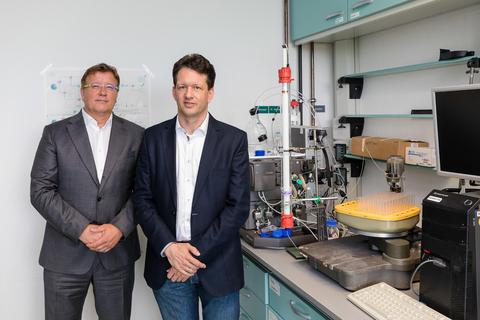
Our innovative research approaches at the interface of molecular biology and medicine open up new perspectives in the treatment of neurodegenerative diseases. Through the targeted modulation of pathological protein aggregates, we strive to fundamentally change the course of synucleinopathies such as Parkinson’s disease and MSA. Our work is more than research – it is a promise to patients and their families to relentlessly search for solutions that could improve the lives of millions of people.