Multiple system atrophy (MSA) – a rare but serious nerve disease


What is multiple system atrophy (MSA)?
Neurodegenerative diseases such as Parkinson’s disease and multiple system atrophy (MSA) are diseases in which nerve cells in the brain gradually die off. This leads to various problems, especially with movement and control of the body.
The accumulation and aggregation of a certain protein (alpha-synuclein) in the nerve cells probably plays an important role in both diseases.
MSA is an atypical form of Parkinson’s disease. It has a prevalence of 4 to 5 cases per 100,000 people and is therefore rarer, but shows a faster progression than Parkinson’s disease.
Here, too, nerve cells die, but more extensive areas of the brain and more different types of brain cells are affected. This leads to a combination of symptoms that affect both the motor system and the autonomic nervous system.
Diagnosis is largely based on clinical examinations and imaging procedures. Brain imaging (cMRI, cCT) may show structural changes in the cerebellum, brainstem or basal ganglia. Unlike many other neurodegenerative diseases, MSA has a few clearly defined features that aid clinical assessment and help to provide a clearer diagnosis for the patient.
How does MSA manifest?
Typical symptoms
A dysfunction of the autonomic nervous system usually manifests itself in disorders of
- the bladder function
- the erectile function
- intestinal mobility
- the regulation of blood pressure and body temperature
Parkinson’s-like symptoms
These often occur in addition, for example
- slowness of movement
- stiffness of the muscles
Disorders of cerebellar function with impaired coordination, progressive loss of balance or speech disorders are also common.
Thinking and memory disorders (cognitive disorders) are rather rare
Progression and frequency of MSA
Depending on the symptoms, a distinction is made between MSA-P (Parkinson’s-type MSA) with predominantly Parkinson’s symptoms and MSA-C (cerebellar-type MSA) with predominantly cerebellar dysfunction. The two clinical manifestations MSA-P and MSA-C occur in a ratio of three to two.
Around 4-5 out of every 100,000 people suffer from MSA. The disease typically begins in adulthood, usually between the ages of 50 and 60. Men and women are affected to roughly the same extent and there is no difference in the clinical course. To date, there is no cure and no specific drug treatment for MSA. The average survival time after diagnosis is six to ten years.
How is MSA treated?
Medication and supportive therapies can alleviate motor symptoms, but there is currently no cure. The treating neurologist can create an individualized treatment plan tailored to the patient’s specific needs. This plan may include various treatment options:
Drug therapy:
Drugs such as levodopa can help to compensate for the dopamine deficiency and improve movement symptoms.
Physiotherapy:
Regular exercises to improve mobility and balance.
Occupational therapy:
Provides support in coping with everyday activities and adapting the living environment.
Speech therapy:
Helps with speech and swallowing problems.
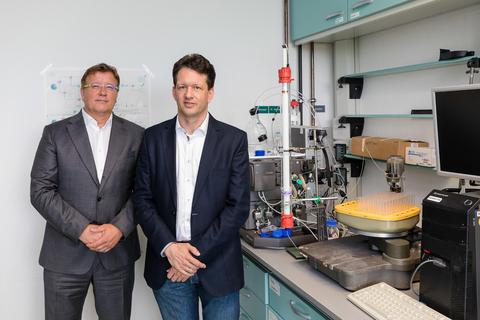
Our innovative research approaches at the interface of molecular biology and medicine open up new perspectives in the treatment of neurodegenerative diseases. Through the targeted modulation of pathological protein aggregates, we strive to fundamentally change the course of synucleinopathies such as Parkinson’s disease and MSA. Our work is more than research – it is a promise to patients and their families to relentlessly search for solutions that could improve the lives of millions of people.