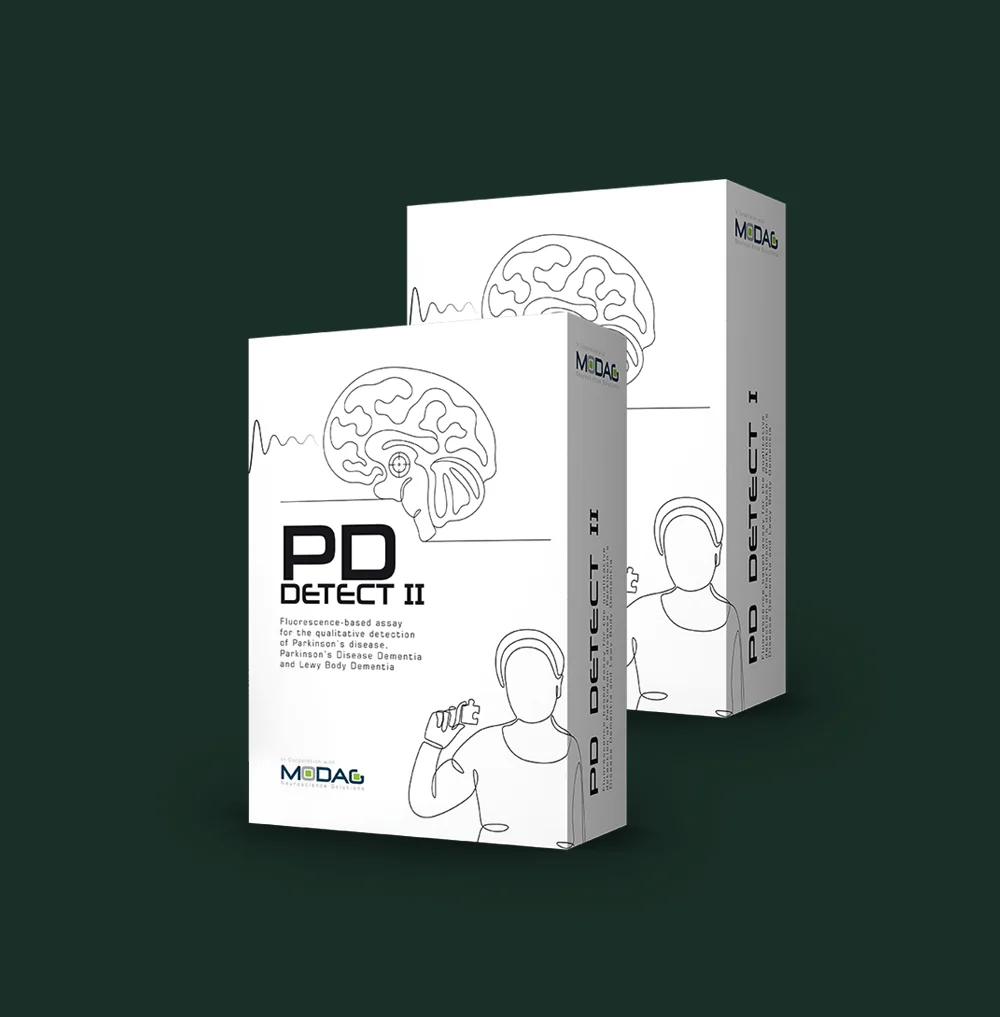
Groundbreaking diagnostics of neurodegenerative diseases.

Our innovative PD DETECT method revolutionizes the highly sensitive detection and differential diagnosis of Parkinson’s disease and MSA.

Innovative diagnostics for neurodegenerative diseases.

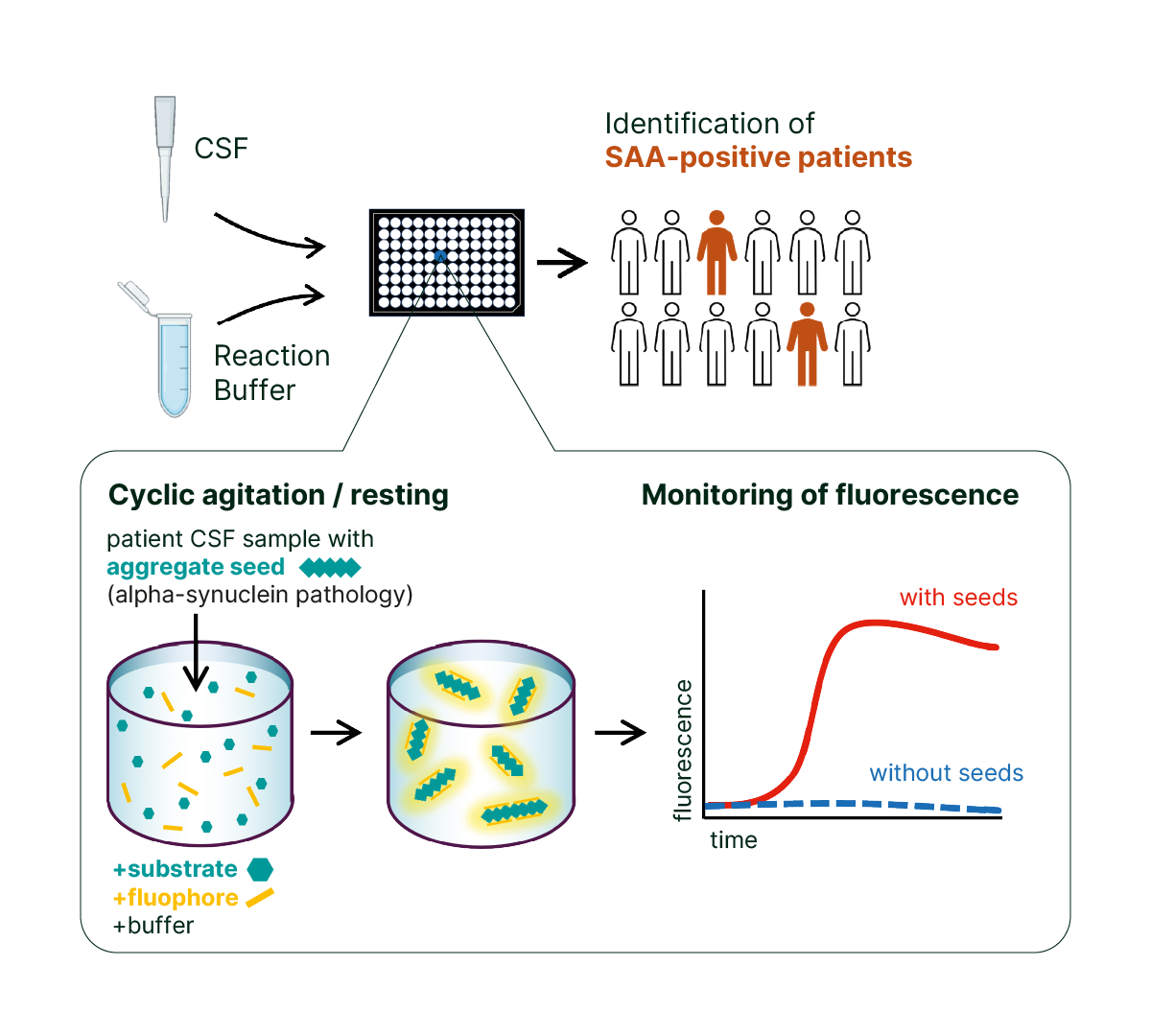
From mid-2025, AIDA GmbH, in cooperation with MODAG, will open a state-of-the-art diagnostics laboratory that will offer doctors, scientists and clinics an innovative method for examining samples. With PD DETECT, MODAG’s Seed Amplification Assay (SAA), we can precisely detect alpha-synuclein pathologies and thus revolutionize the diagnosis of neurodegenerative diseases such as Parkinson’s and multiple system atrophy (MSA). Take advantage of our exceptional expertise in the analysis of your samples.
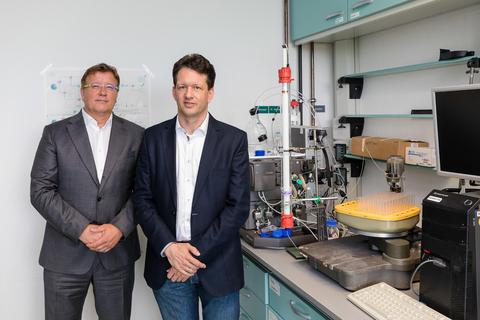
Cutting-edge research meets precision

The MODAG laboratory offers:

  • Biosafety Level 1 certified
  • State-of-the-art equipment for maximum precision
  • Performed by experienced scientists

Advantages at a glance
Fast, precise, scientifically sound

PD DETECT offers decisive advantages for the diagnosis of neurodegenerative diseases
  • Early detection: identification of SAA-positive patients at an early stage of the disease

  • Precision: High sensitivity and specificity enable a clear differential diagnosis between Parkinson’s and MSA

  • Qualitative: Yes/no result within 15 business days
  • Quantitative: Determination of the LFP score for seed load quantification

This test represents a significant advance in Parkinson’s diagnostics by enabling early and accurate detection of the disease, which could be of great importance for future treatment strategies.“

Dr. Torsten Matthias, CEO

PD DETECT in comparison
Diagnostic procedures using the example of Parkinson’s disease

Clinical examination

Traditional:

Diagnosis based on symptoms such as tremor, muscle stiffness and slowed movements in combination with neuroimaging techniques

PD DETECT:

Can detect Parkinson’s disease even at an early stage of the disease

Imaging procedures

Traditional:

Show structural changes or dopamine deficiency in the brain

PD DETECT:

Directly detects misfolded alpha-synuclein proteins that are causative for Parkinson’s disease

L-Dopa test

Traditional:

Tests the response to Parkinson’s medication

PD DETECT:

Enables a diagnosis regardless of the response to medication

Application examples and clinical relevance

PD DETECT offers a wide range of applications in clinical practice

1. objective diagnosis:
Thanks to its high sensitivity, PD DETECT can detect alpha-synuclein pathologies at an early stage of the disease. PD DETECT supports doctors in making a diagnosis more quickly and thus reduces the time patients have to wait for a diagnosis.

2. differential diagnosis:
With a specificity of 100% in differentiating between Parkinson’s and MSA, PD DETECT supports physicians in making a precise diagnosis. This is particularly important as the treatment approaches for these diseases differ.

3. therapy monitoring:
The quantitative LFP score makes it possible to objectively assess the course of the disease and the effectiveness of therapies.

4. research:
PD DETECT can be used in clinical trials to evaluate the efficacy of new therapies and deepen our understanding of disease mechanisms.

The clinical relevance of PD DETECT lies in the improvement of patient care through more precise diagnoses, early intervention options and individualized treatment strategies.

Future prospects

The development of PD DETECT opens up exciting possibilities for the future of Parkinson’s diagnosis and treatment

  • Screening programs: In the long term, PD DETECT could be used in screening programs for at-risk groups to detect Parkinson’s in its early stages.
  • Personalized medicine: Quantitative analysis could contribute to the development of customized therapies tailored to a patient’s individual disease profile.
  • Biomarker-supported therapy development: PD DETECT could accelerate the development of new drugs by enabling precise measurements of alpha-synuclein pathology in clinical trials.
  • Integration with other biomarkers: In the future, PD DETECT could be combined with other biomarkers to obtain an even more comprehensive picture of the disease state.
  • Extension to other neurodegenerative diseases: The technology behind PD DETECT could be adapted for the diagnosis of other proteinopathies.

At MODAG, we are continuously working on further developing PD DETECT and optimizing its use in clinical practice.

Our aim is to fundamentally improve the diagnosis and treatment of Parkinson’s and related diseases and thus sustainably improve the quality of life of those affected.