Erfahren Sie mehr über unsere innovativen Therapieansätze und laufenden klinischen Studien zu neurodegenerativen Erkrankungen – von Krankheitsinformationen bis hin zu Forschungsergebnissen.

Erfahren Sie mehr über unsere Forschung zu Therapeutika, insbesondere über unsere Oligomer-Modulatoren, sowie über unsere klinischen Studien und wissenschaftlichen Publikationen.

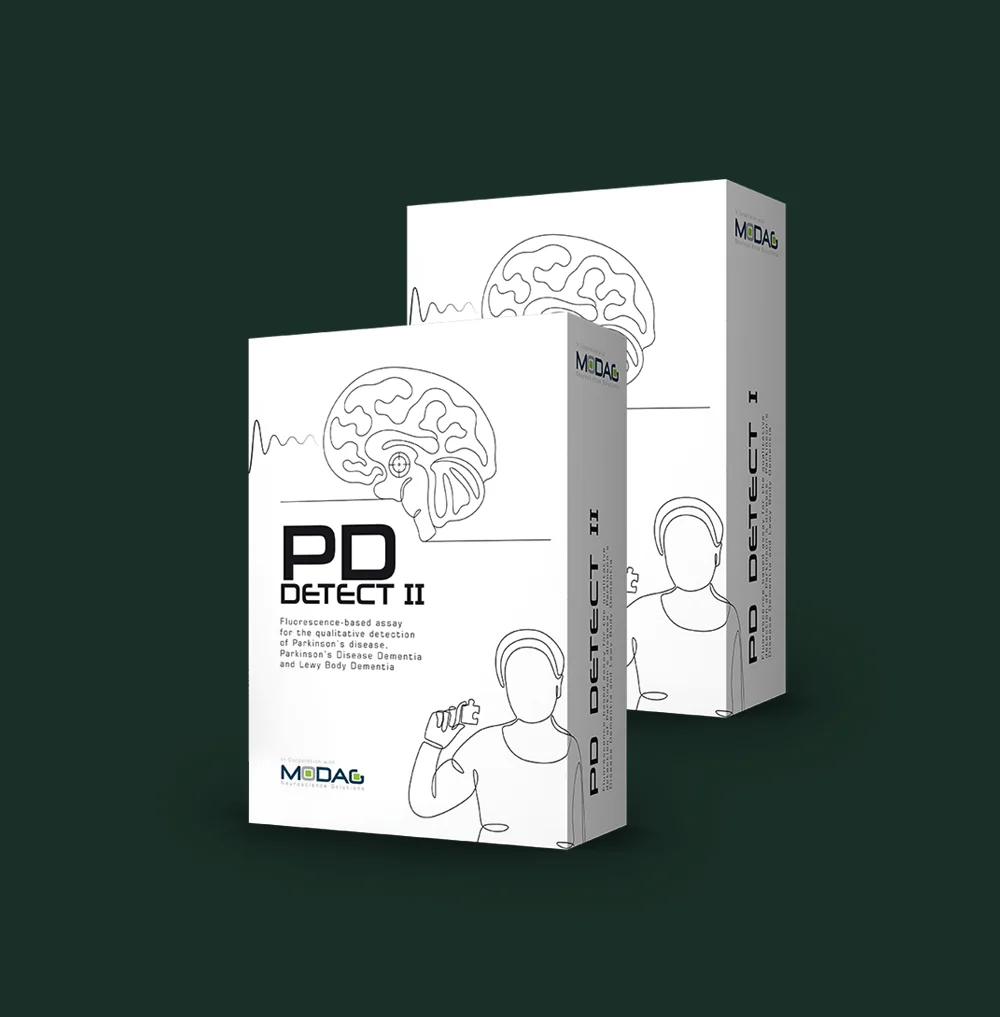
Erfahren Sie mehr über unsere innovativen Diagnoseverfahren wie PET-Tracer und SAA (Seed Amplification Assay) zur frühzeitigen Erkennung von neurodegenerativen Erkrankungen. In unserem neu eingerichteten Einsendelabor werden wir in Kürze den SAA-Test PD DETECT einsetzen.

Neurodegenerative diseases such as Parkinson’s disease and multiple system atrophy (MSA) affect millions of people worldwide and no cure is yet available.
We want to change that. That’s why we give our all every day.
Facts on Parkinson’s disease and MSA
> 10 million
Approximately 10 million people worldwide are affected by Parkinson’s disease. After Alzheimer’s disease, Parkinson’s is the most common neurodegenerative disease and the most common movement disorder.
Frequency
MSA is a rarer disease (4 to 5 cases per 100,000 inhabitants), but progresses much faster than Parkinson’s disease.
Distribution
MSA affects men and women equally often, while Parkinson’s disease tends to be diagnosed more frequently in men.
Age
The age at which MSA is diagnosed is usually between the ages of 40 and 60.
The average age at which Parkinson’s disease is diagnosed is between the ages of 50 and 80.
Life expectancy
The average life expectancy after a diagnosis of Parkinson’s disease is around 10 to 20 years, and only around 6 years for MSA, which underlines the urgency of new therapeutic approaches.
+++ Phase 1 study successfully completed. +++ Phase 2 clinical trial with 200 study participants has started +++ Phase 1 study successfully completed. +++ Phase 2 clinical trial with 200 study participants has started

MODAG is developing pioneering therapeutics from the small molecule drug class that can specifically dissolve pathological protein aggregates and have the potential to slow down, stop or even reverse the course of the disease.
Hope for the future. Pioneering therapies for neurodegenerative diseases.
At MODAG, we are passionate about developing breakthrough therapies for neurodegenerative diseases. Emrusolmin (anle138b) aims to stop the progression of the disease by harmful alpha-synuclein deposits are dissolved.